Impact Windows in Miami-Dade: What Homeowners Need to Know Before Buying
The difference between a good impact window installation and a bad one isn’t visible from the curb. It’s in the product approval, the permit, and the contractor’s license. Here’s what to check before you sign anything.
What “Impact” Actually Means — and What It Doesn’t
The term “impact window” has a specific technical meaning that matters in Miami-Dade. It refers to a window system that combines a laminated glass unit, two panes of glass bonded around a polyvinyl butyral (PVB) interlayer, with a reinforced frame tested to withstand large-missile impact and sustained wind pressure. When the glass breaks, the interlayer holds the shards in place. The opening stays sealed.
What it does not mean: tempered glass alone is not impact-rated. A window labeled “hurricane resistant” without a Florida Product Approval Number (NOA) is not legal to install in Miami-Dade or Broward. In the High-Velocity Hurricane Zone (HVHZ), every window and door replacement must carry a Miami-Dade or Florida Building Code Product Approval. The NOA is issued after the product passes large-missile testing (a 9-pound 2x4 fired at 50 feet per second), cyclic pressure testing, and water infiltration testing. No NOA means the product hasn’t cleared that bar.
The testing itself follows specific Florida Building Code Testing Application Standards (TAS), and Miami-Dade County references each one on the NOA documentation. TAS 201 is the large-missile impact test: the 9-pound 2x4 fired at the window at 50 feet per second, simulating wind-borne debris in a hurricane. TAS 202 is the cyclic wind pressure test, which subjects the window to thousands of pressure cycles simulating sustained hurricane winds after the initial impact, confirming the glass and frame hold under repeated loading rather than a single hit. TAS 203 covers forced-entry resistance, relevant for both storm protection and everyday security. A product carries an NOA only after passing all three, and the NOA documentation references the specific TAS test reports the approval is based on. If a salesperson can’t explain which TAS standards their product passed, ask to see the actual test reports referenced on the NOA, not just the approval number.
Before any contractor pulls a permit on your project, ask for the product’s NOA number. You can verify it yourself at the Miami-Dade County product approval database. If a contractor can’t produce it, stop there.
Why the NOA Is the Most Important Number to Check
The Florida Product Approval system exists precisely because South Florida is a uniquely hostile environment for building materials. Products that perform fine in the rest of the country can fail catastrophically in the HVHZ. The NOA number is the documented proof that a specific window system (at a specific size, in a specific frame material, with a specific glass configuration) has been independently tested to perform under HVHZ conditions.
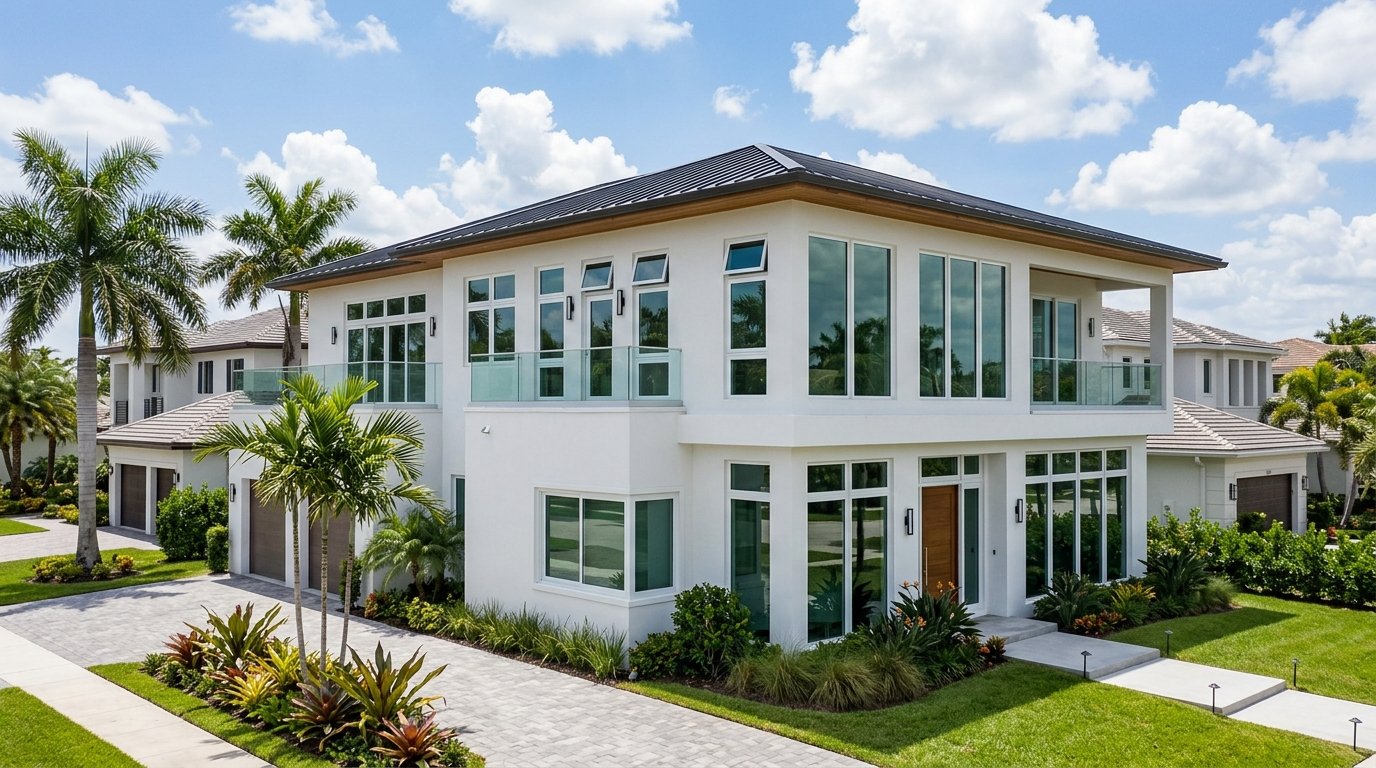
The NOA approval is window-specific, not brand-specific. A manufacturer may have dozens of NOA approvals covering different product lines, frame configurations, and size ranges. An installer who is substituting a product or using a different configuration than what’s specified on the permit is installing outside the NOA, and the installation will fail county inspection.
This is one of the more common problems we see when homeowners come to us after a bad experience: a contractor installed a product, it failed inspection because the configuration didn’t match the NOA, and now the homeowner is stuck with an unpermitted, non-code-compliant opening and a contractor who has moved on. Verify the NOA before the contract is signed, not after the glass is ordered.
Choosing a Product Tier: Good, Better, Best
Not every impact window on the NOA-approved list is the same price, the same frame material, or the same fit for your project. Robson installs three manufacturer lines across Miami-Dade and Broward, and we name the specific product and its NOA number on every quote, never a placeholder. Frame material is one of the bigger choices inside that decision. See our comparison of vinyl vs. aluminum window frames in Florida.
| Tier | Manufacturer / Line | Frame | Best Fit |
|---|---|---|---|
| Good | ECO Window Systems | Aluminum & vinyl | Manufactured locally in Medley, FL — strong NOA coverage, shorter lead times, and a value-engineered price point for whole-house replacements on a budget. |
| Better | PGT WinGuard | Vinyl & aluminum | The most widely specified impact line in South Florida. Broad NOA coverage across window types and sizes; the balance point most homeowners land on. |
| Best | PGT WinDoor | Aluminum, architectural-grade | Premium frames for larger openings, higher design-pressure requirements, and homes where sightlines and finish matter as much as the rating. |
The right tier depends on your opening sizes, your home’s design-pressure requirements (which vary by elevation, exposure, and roof height), and your budget, not on which product carries the highest margin for the installer. Every line above carries current Large Missile Impact NOA approval; none is “more legal” than another. The difference is frame material, price, lead time, and fit for your specific openings. Ask your estimator to name the product line and NOA number for every opening, not just a tier name.
The Insurance Discount Is Real — But Only If the Installation Is Documented Correctly
Replacing single-pane or older windows with NOA-compliant impact windows can meaningfully reduce your windstorm insurance premium. In Miami-Dade, opening protection is one of the primary rating factors for windstorm coverage. When a licensed inspector performs a wind mitigation inspection after installation and documents that all openings are protected by impact-rated products, your carrier recalculates your windstorm premium based on the improved risk profile.
The discount varies by carrier and by how complete your opening protection is. Partial protection (impact windows on the front of the house, plywood shutters or nothing on the back) earns a smaller credit than full opening protection. A full replacement of every window and door with NOA-compliant products, documented by a permitted installation and a wind mitigation report, typically earns the maximum opening protection credit available under your policy.
The critical word is “documented.” Your carrier needs a wind mitigation inspection report from a licensed inspector to adjust your rate. That report is only credible when the installation was permitted and passed county inspection, because the inspector will reference the permit and the final inspection approval when documenting the opening protection. An unpermitted installation has no paper trail for the inspector to cite, and carriers are increasingly skeptical of wind-mit reports that lack permit documentation.
To put a number on it: some carriers writing windstorm coverage in South Florida apply opening-protection discounts in the range of 20–45% on the wind portion of the premium for a fully impact-protected home, though the exact figure is set by your carrier’s filed rate tables and your policy specifics. Over a 10-year hold, that discount alone can offset a meaningful share of the installation cost, on top of the storm-survival and no-shutters-to-deploy benefit.
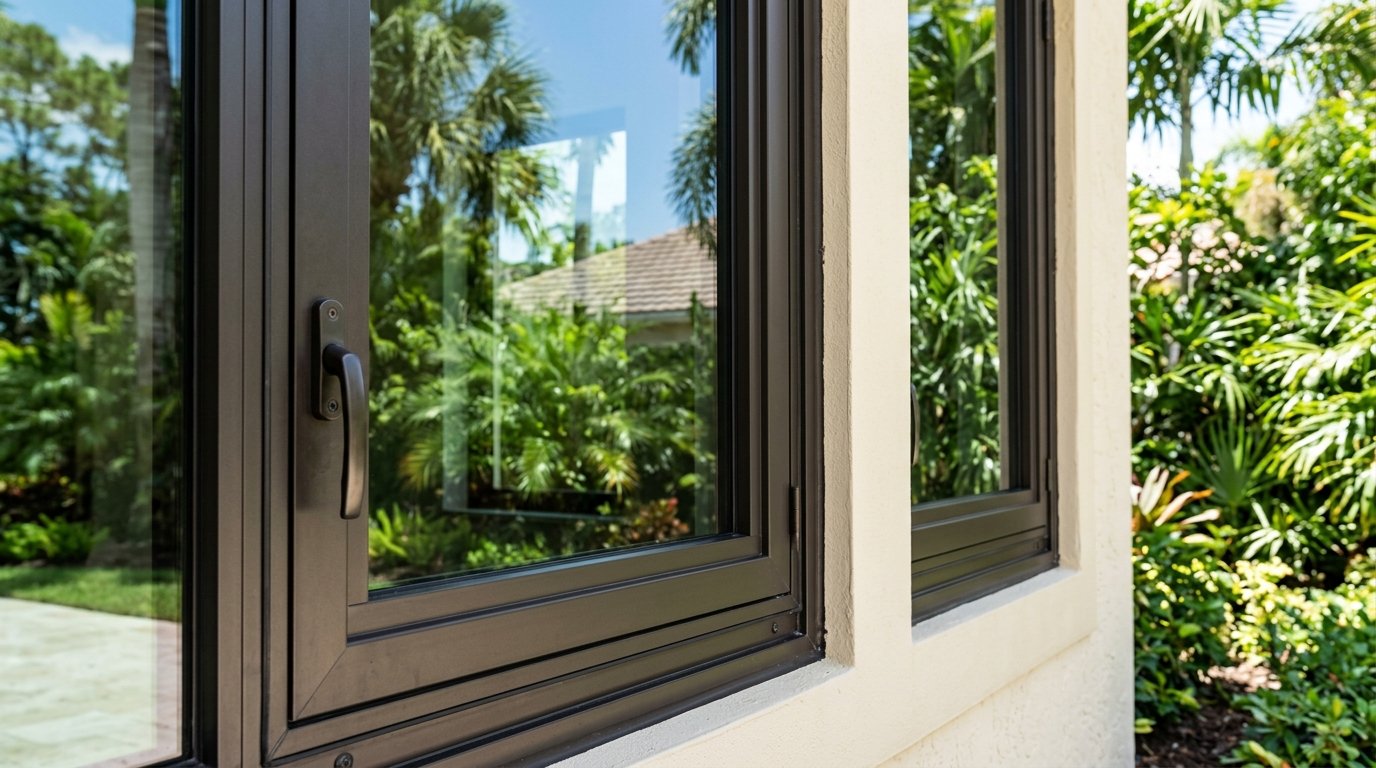
Not Sure Which Tier Fits Your Home?
Get a free estimate that names the specific product line and NOA number for every opening, not a placeholder. We’ll walk you through ECO, PGT WinGuard, and PGT WinDoor and tell you honestly which fits your budget and design-pressure requirements.
Get a Free Impact Window Estimate →The Permit Is Not Optional in Miami-Dade or Broward
Every window replacement in Miami-Dade and Broward requires a permit. This is not a technicality. It is a building code requirement that exists because window installation in the HVHZ is a structural matter. The permit triggers a county inspection that verifies the installation method, the anchoring, the flashing, and the product match against the NOA. Without that inspection, there is no official confirmation that the work was done correctly.
The downstream risks of an unpermitted window installation parallel those of an unpermitted roof: insurance claims involving the windows may be denied or contested, the sale of the home can be complicated by an open or missing permit, and retroactive permitting is expensive and sometimes impossible if the installation doesn’t meet current code. In Miami-Dade, the county can also require removal and reinstallation at the homeowner’s expense.
A licensed contractor pulls the permit in their own name as contractor of record. If a contractor tells you the permit is your responsibility to pull as the homeowner, or suggests you don’t need one, that is a red flag. Robson Industrial Group manages the entire permit process (application, fees, scheduling, and closeout) and includes that cost in every estimate. License for verification: CGC1541144.
How the Permit and Inspection Process Actually Runs
Most homeowners have never watched a permitted window project from the inside. Here is the sequence, start to finish:
Measure & assess
We measure every opening and confirm which NOA-approved product lines meet your design-pressure requirements before we quote anything.
Scope & estimate
A written, line-item estimate naming the product line and NOA number for each opening, not a generic “impact windows” line item.
Permit application
We file the permit in our name as contractor of record, with the NOA numbers on the application. This is typically the longest review step. Municipal timelines vary by jurisdiction and season.
Order & manufacture
Your custom-sized units are built to the exact opening dimensions once the permit is filed, usually the longest single stretch on the schedule.
Removal & installation
Old windows out, new units anchored to the exact NOA specification (correct anchors, embedment depth, and spacing for your substrate), sealed and flashed opening by opening.
County inspection & closeout
The county inspector verifies the installation against the permit and the NOA. On approval, we hand you the closeout package: permit, product approvals, and photos for your wind mitigation inspection.
Installation Timeline: What to Expect
For a typical whole-house impact window replacement in Miami-Dade or Broward, plan on roughly 6 to 10 weeks from signed contract to final inspection. Most of that time is not installation. It is manufacturing lead time on custom-sized, NOA-approved units, plus municipal permit review, which varies by city and gets slower heading into hurricane season as demand spikes.
The on-site installation itself is usually a few days to a week depending on how many openings are involved. The wait is almost entirely upstream of the install crew showing up. If you’re planning around hurricane season, start the process in spring; permit and manufacturing queues both lengthen from May through November.
Financing
Financing may be available through third-party providers, subject to their approval and terms. Ask us for details.
What to Ask Before Signing with Any Window Contractor
Most homeowners get three bids and compare prices. The five questions below will tell you more about a contractor than the price will.
1. Can you provide the NOA number for the product you’re quoting? A legitimate contractor has this at hand. It should match the product specification in the contract.
2. Will you pull the permit and is it included in the price? Yes and yes are the right answers. Any other answer is a flag.
3. Can I see your license and certificates of insurance? Verify the license at myfloridalicense.com by searching the number directly. For general contractors in Florida, look for a “Certified General Contractor” or “Certified Residential Contractor” license. Robson Industrial Group: CGC1541144.
4. Do you carry workers’ compensation insurance? Window installation involves crews on ladders and scaffolding. An uninsured injury on your property can become your liability. Request the certificate before work begins.
5. Will you provide an installation certificate for my wind mitigation inspection? After the county signs off, you need documentation for your insurance carrier. A contractor who has done this before knows exactly what the wind mitigation inspector needs.
Robson Industrial Group · CGC1541144 · Certified General Contractor · Miami-Dade, Broward, & West Palm Beach, FL · (954) 546-4161
Frequently Asked Questions
Do I need a permit to replace windows in Miami-Dade or Broward?
Yes, every window replacement requires a permit in both counties. The permit triggers a county inspection that confirms the installation meets HVHZ code. Without it, you risk insurance claim complications, sale delays, and potential removal-and-reinstallation orders.
What’s the difference between impact windows and hurricane shutters?
Impact windows are a permanent, always-on solution: the laminated glass and reinforced frame protect the opening 24/7 with no deployment required. Shutters are secondary protection that must be installed before a storm and stored otherwise. Impact windows also qualify for the maximum opening-protection insurance credit; accordion shutters may qualify for a partial credit depending on your carrier.
How much can impact windows reduce my homeowner’s insurance?
It varies by carrier and by how complete your opening protection is. Full opening protection (all windows and doors replaced with NOA-compliant impact products, documented by a permitted installation and a wind mitigation report) typically earns the maximum windstorm premium credit available under your policy. Many homeowners see the annual savings offset a significant portion of the financing cost.
What is a Miami-Dade NOA and why does it matter for impact windows?
A Notice of Acceptance (NOA) is Miami-Dade County’s product approval, issued after a window system passes large-missile impact testing, cyclic pressure testing, and water infiltration testing specific to HVHZ conditions. No NOA means the product hasn’t been approved for installation in Miami-Dade or Broward, and a permit using an unapproved product will fail county inspection.
How do I verify a window contractor’s license in Florida?
Go to myfloridalicense.com and search the license number directly, not just the contractor’s word. Look for an active “Certified General Contractor” (CGC) or “Certified Residential Contractor” (CRC) license. Robson Industrial Group: CGC1541144, active and verifiable online. Also request current certificates of liability insurance and workers’ compensation before any crew arrives.
What’s the difference between ECO Window Systems and PGT impact windows?
Both carry current Large Missile Impact NOA approval, so neither is “more legal” than the other: the difference is frame material, price, and fit. ECO Window Systems is manufactured locally in Medley, FL and is typically the more budget-friendly option with shorter lead times. PGT WinGuard is the most widely specified impact line in South Florida with broad NOA coverage across window types. PGT WinDoor is the architectural-grade, premium tier for larger openings and higher design-pressure requirements. We name the specific product and NOA number for every opening on your quote.
Can I finance impact windows in Miami-Dade?
Financing may be available through third-party providers, subject to their approval and terms. Ask us for details.
How long does an impact window project take from contract to final inspection?
Plan on roughly 6 to 10 weeks for a typical whole-house project. Most of that time is manufacturing lead time on custom-sized NOA-approved units and municipal permit review, not installation. The on-site removal and installation itself usually takes a few days to a week depending on how many openings are involved. Timelines lengthen heading into hurricane season, so starting in spring gives you the most buffer.
Related Resources
How Florida product approvals work
What the Notice of Acceptance is, how to look up an NOA number, why it’s required in the HVHZ, and what happens when a product is installed without one.
Read the NOA Guide →Living in the High-Velocity Hurricane Zone
What the HVHZ designation means for every window, door, and roof replacement on your property, and how to stay compliant through every project.
Read the HVHZ Guide →Licensed · Permitted · CGC1541144
Serving Miami Beach, Kendall, Doral, Coral Gables, Hialeah, North Miami, and surrounding communities. Impact windows, doors, and roofing.
See Service Areas →Same NOA framework, applied to doors
French doors, sliding glass doors, and entry doors each carry separate NOA approvals. What to verify before you sign a door contract.
Read the Doors Guide →Financing
Financing may be available through third-party providers, subject to their approval and terms. Ask us for details.
See Financing Options →Get a Free Impact Window Estimate
An unpermitted or non-NOA-compliant window installation doesn’t just risk a failed inspection. It can mean a denied insurance claim after the next storm and a documented compliance gap when you go to sell. Robson Industrial Group is a Florida Certified General Contractor (CGC1541144) serving Miami-Dade and Broward. We name the product and NOA number on every quote, pull every permit, install to HVHZ code, and carry active workers’ comp and liability insurance.
Get a Free Estimate →Call: (954) 546-4161 · CGC1541144 · Miami-Dade, Broward, & West Palm Beach