Impact Doors in Miami-Dade: What Homeowners Need to Know Before Buying
Impact doors carry the same compliance requirements as impact windows, but the product categories are different, the NOA rules vary by door type, and the contractor licensing questions get more specific. Here is what to verify before you sign any contract.
What Makes a Door “Impact-Rated” — and What Doesn’t
The term “impact door” describes a door system that has been tested and approved to resist large-missile impact and sustained wind pressure under Florida’s High-Velocity Hurricane Zone (HVHZ) standards. The glass panel (whether in a French door, sliding glass door, or impact entry door) uses a laminated construction: two glass panels bonded around a polyvinyl butyral (PVB) interlayer. When the glass breaks, the interlayer holds the fragments in place. The opening stays sealed.
What does not qualify: a decorative glass door with standard tempered glass has no impact rating. A steel or fiberglass door rated for security is not the same as an impact-rated door. In Miami-Dade and Broward, every exterior door replacement (entry doors, French doors, sliding glass doors, and patio doors) that uses glass must carry a Florida Product Approval number (NOA) to be installed legally under permit in the HVHZ. Without an NOA, the door has not passed the required large-missile impact test (a 9-pound 2x4 fired at 50 feet per second), and no building department will sign off on the installation.
Ask any contractor to provide the NOA number for the specific door product they are quoting. You can verify it yourself in the Miami-Dade product approval database. If the contractor cannot produce it, the product has not been approved for HVHZ installation.
French Doors and Sliding Glass Doors: Different Products, Same NOA Requirement
Homeowners replacing multiple openings often ask whether they can mix door types within the same product line. For example, French doors from one series and sliding glass doors from another. The answer matters both for product approval compliance and for the GAF analogy: approvals are product-specific and configuration-specific.
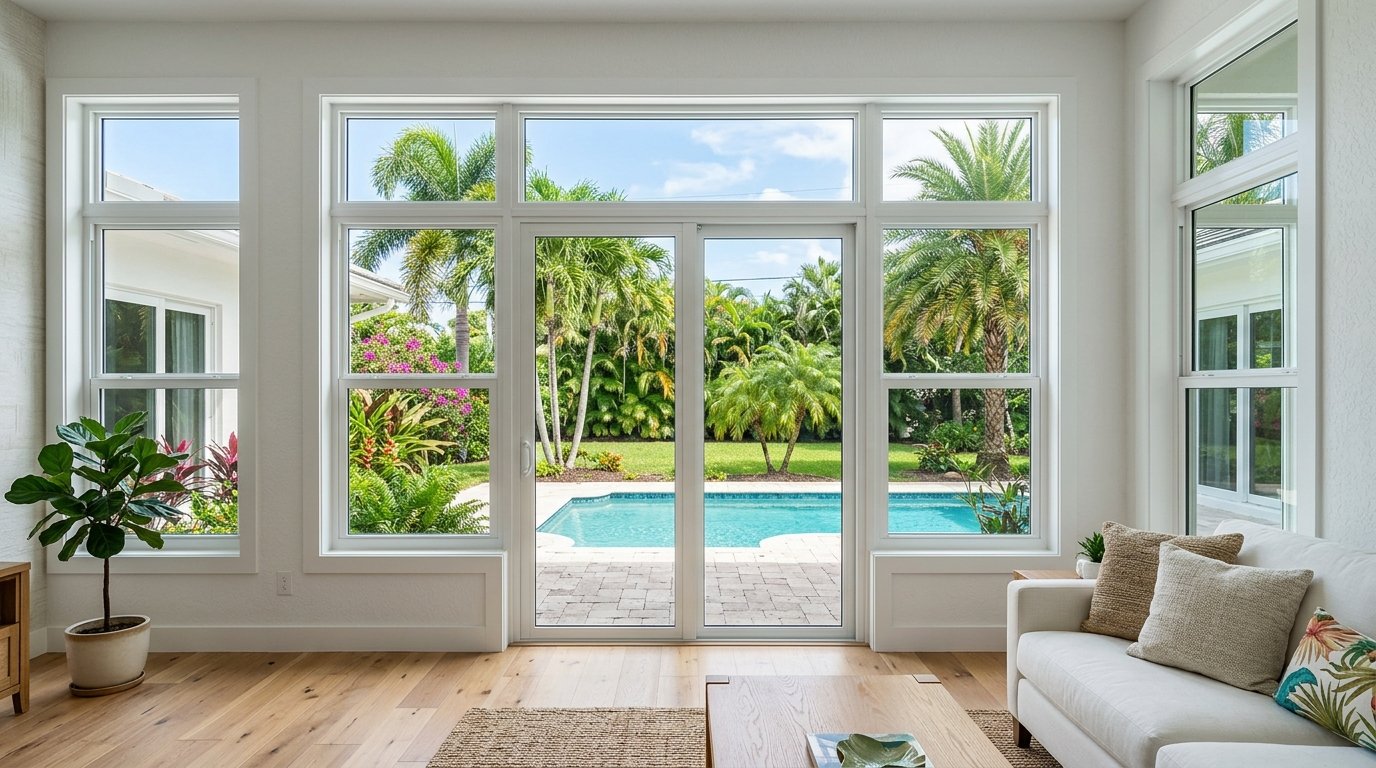
A Florida NOA for a French door does not cover the same manufacturer’s sliding glass door, even within the same product line. Each door type (French door (active/active, active/stationary), sliding glass door (2-panel, 3-panel, pocket), and impact entry door) has its own NOA that covers specific sizes, glass configurations, and frame materials. A contractor quoting a full opening-protection project should provide the NOA number for each door type, not a single approval that supposedly covers all of them.
This is one of the most common permitting problems we see: a contractor pulls a permit using one NOA, installs a different configuration, and the county inspector fails the job because the installed product does not match the permit. The homeowner is then left with an open permit, a failed inspection, and a contractor who may already be on the next job. Verify the NOA match (door type, size, and glass configuration) before the product is ordered, not after the glass arrives.
The Permit Is Required — and the License Matters
Every exterior door replacement in Miami-Dade and Broward requires a permit. This applies to entry doors, French doors, sliding glass doors, and any glazed opening. The permit triggers a county inspection that verifies the installation method, anchoring pattern, sealant application, and product-to-NOA match. Without the inspection, there is no official confirmation the door was installed correctly, and no documentation your insurer can rely on when adjusting a wind or water damage claim.
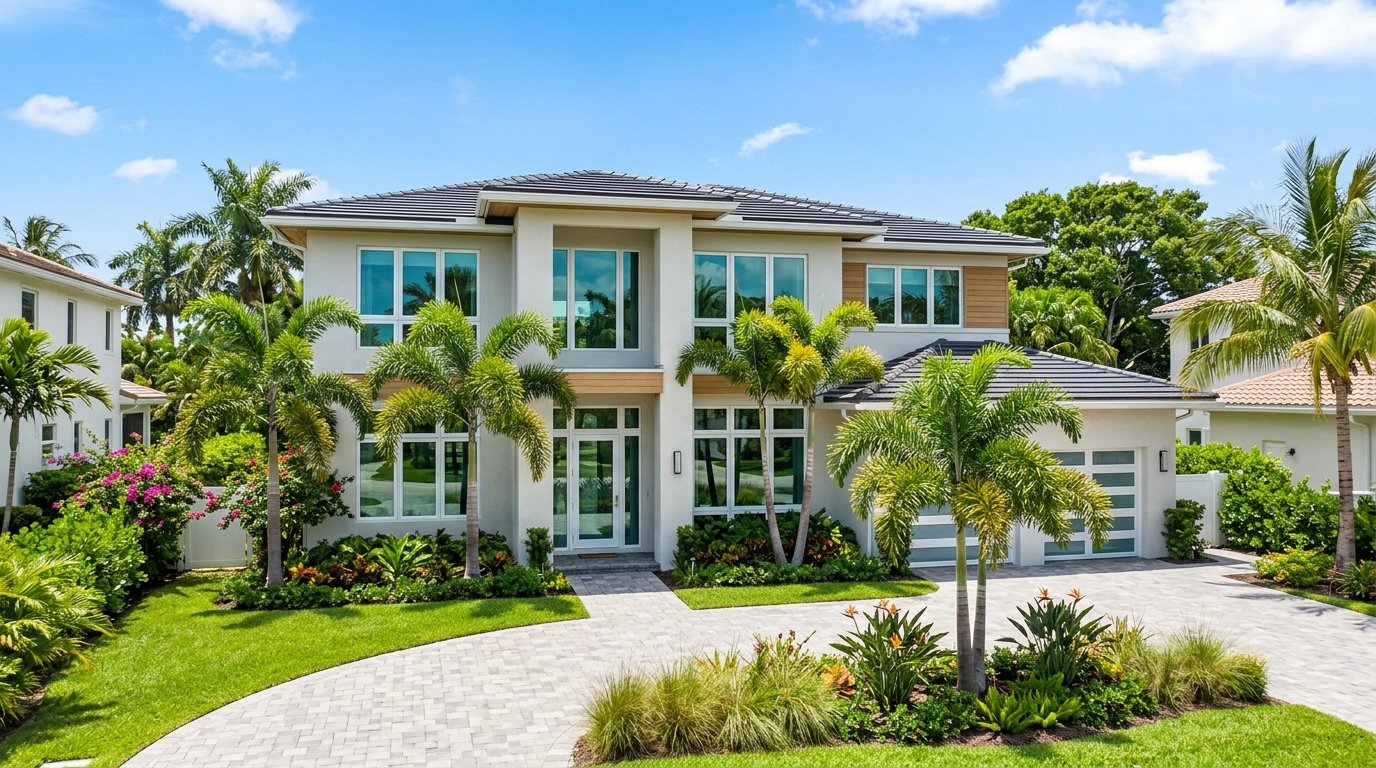
The license requirement is specific: the contractor must hold an active Florida license that covers the scope of the work. For door replacement involving structural framing modifications, rough openings, or any work beyond a like-for-like swap, the contractor must hold a Certified General Contractor (CGC) or Certified Residential Contractor (CRC) license. Robson Industrial Group carries CGC1541144: active, publicly verifiable at myfloridalicense.com. Verify any contractor’s license directly on that site before work begins, not from a business card or website claim.
A door contractor who suggests the permit is optional, or that the homeowner should pull an owner-builder permit to save money, is either unaware of the HVHZ requirements or is trying to avoid the accountability that comes with a licensed permit. Either way, the long-term risks fall on the homeowner: contested insurance claims, open permit complications at resale, and potential removal-and-reinstallation orders.
The Insurance Credit Is Real — But Only If All Openings Are Covered
Replacing exterior doors with impact-rated, NOA-approved products can reduce your wind insurance premium, but only under specific conditions. Your insurer calculates the opening-protection credit based on what percentage of your glazed openings have rated protection. A house with impact windows on the front and standard sliding glass doors on the back pool deck does not qualify for the full opening-protection credit. The door openings count.
Full opening-protection credit, the maximum available under most Florida wind policies, requires that every glazed exterior opening, including all doors, be covered by impact-rated products with NOA approval. The documentation chain runs from the permit to the county inspection approval to a wind mitigation inspection report from a licensed inspector. Your insurer needs that report to adjust your rate. The report only holds up if the work had a permit, because the inspector will reference the permit and final inspection approval when documenting your opening protection.
Homeowners who replace windows but keep old sliding glass doors often find their wind mitigation inspector cannot certify full opening protection. The partial credit is less than they expected, and the cost to add doors later, with a separate permit and mobilization, is higher than if both had been done in the same project. If the goal is the maximum insurance credit, plan the doors and windows as a single project.
Five Questions to Ask Before Signing with Any Door Contractor
1. Can you provide the NOA number for each door product you are quoting? French doors and sliding glass doors have separate approvals. Get the NOA number for each type. Verify it in the Miami-Dade product approval database before the product is ordered.
2. Will you pull the permit and is it included in the price? Yes to both. Any other answer is a red flag. The permit is not optional in Miami-Dade or Broward for exterior door replacement.
3. Can I see your license? Look up the license number directly at myfloridalicense.com. Look for an active Certified General Contractor (CGC) or Certified Residential Contractor (CRC) license. Robson Industrial Group: CGC1541144.
4. Do you carry workers’ compensation insurance? Door installation crews work on ladders and around structural openings. An uninsured injury on your property can become your liability. Request the certificate before work starts.
5. Will you provide an installation certificate for my wind mitigation inspection? After the county approves the inspection, you will need documentation for your insurer. A contractor with experience in permitted HVHZ door installations knows exactly what the wind mitigation inspector needs.
Robson Industrial Group · CGC1541144 · Florida Certified General Contractor · Licensed and Insured · Miami-Dade, Broward, and West Palm Beach, FL · (954) 546-4161
Frequently Asked Questions
Do I need a permit to replace exterior doors in Miami-Dade or Broward?
Yes: every exterior door replacement in both counties requires a permit. The permit triggers a county inspection that verifies the installation and confirms the product matches the NOA. Without the inspection, you have no documentation for your insurer, and a contested claim or resale complication is the likely result.
Do French doors and sliding glass doors have separate NOA approvals?
Yes. A Florida NOA is product-specific and configuration-specific. A French door approval does not cover a sliding glass door, even from the same manufacturer and product line. If a contractor is quoting both door types, they should provide a separate NOA number for each. Verify each one in the Miami-Dade product approval database before the product is ordered.
Can impact doors reduce my homeowner’s insurance premium?
Yes, but only if all glazed exterior openings have impact-rated protection. Replacing doors alone while keeping non-impact windows, or replacing windows while keeping non-impact doors, will not qualify you for the full opening-protection credit. Full credit requires every exterior glazed opening to be covered by NOA-approved impact-rated products, documented through a permitted installation and a wind mitigation inspection report.
What license does a door contractor need in Florida?
For exterior door replacement involving structural work or modifications to the rough opening, the contractor must hold a Florida Certified General Contractor (CGC) or Certified Residential Contractor (CRC) license. Verify the license directly at myfloridalicense.com: not from a business card or website claim. Robson Industrial Group holds CGC1541144, active and publicly verifiable.
What is the difference between an impact door and a hurricane-rated door?
In Florida, the relevant standard is the Florida NOA: a product approval issued after independent testing to HVHZ requirements including large-missile impact, cyclic pressure loading, and water infiltration. “Hurricane-rated” is a marketing term with no standardized definition. Before assuming a door is approved for Miami-Dade installation, ask for the NOA number and verify it in the county product approval database.
Related Resources
Impact Windows in Miami-Dade: What Homeowners Need to Know
The same NOA, permit, and contractor-vetting framework. Applied to impact windows. Start here if you are replacing both windows and doors in the same project.
Read the Windows Guide →What Is a Miami-Dade NOA and Why Does It Matter?
A deep dive into the Florida product approval process: what gets tested, how to look up an NOA number, and why it is the single most important document in any HVHZ window or door project.
Read the NOA Guide →Licensed and Insured · CGC1541144
Serving Miami Beach, Kendall, Doral, Coral Gables, Hialeah, North Miami, and surrounding communities. Impact windows, impact doors, and roofing under permit.
See Service Areas →Get a Free Estimate for Impact Doors
Robson Industrial Group is a Florida Certified General Contractor (CGC1541144) serving Miami-Dade and Broward. We manage the permit, install NOA-approved impact doors to HVHZ code, and carry active workers’ compensation and liability insurance. Every installation includes permit management and the NOA product-approval documentation your independent wind mitigation inspector will need.
Get a Free Estimate →Call: (954) 546-4161 · CGC1541144 · Miami-Dade, Broward, and West Palm Beach