Metal Roof vs. Tile Roof in South Florida:
Which Is Right for You?
Both metal and tile can be excellent choices in Miami-Dade and Broward, but the HVHZ, your home's structural capacity, your HOA docs, and your long-term budget all narrow the field fast. Here's how to think through it systematically before you commit.
Choosing between metal roofing and a tile roof is the single biggest material decision a South Florida homeowner makes on a re-roof, and in Miami-Dade or Broward, it isn't a style question. It's a hurricane-survivability question and a 30-year cost question wrapped into one. Homeowners searching for the best roof material in Miami usually start by comparing sticker price. That's the wrong first filter. The right first filter is which material's Notice of Acceptance actually holds up in a Category 4 event, and which one costs less per year of service life once you factor in maintenance, insurance credits, and how long it lasts in salt air. This guide walks through both, metal roofing in Miami and tile roof options across Florida, with 2026 numbers, so you can decide with real data instead of a contractor's installation preference. Request a side-by-side written quote for both materials →
The HVHZ Factor: Why South Florida Is Different
Most homeowners comparing metal and tile start with aesthetics or price. In South Florida that's the wrong starting point. The High-Velocity Hurricane Zone (HVHZ), which covers all of Miami-Dade County and all of Broward County, imposes product approval requirements that no other region of the country matches.
Every roofing material installed in the HVHZ must carry a Florida Product Approval (FPA) or a Miami-Dade Notice of Acceptance (NOA) specifically authorizing its use in high-wind conditions. That approval is issued per product, per profile, per fastening method. A tile product approved for a 7/12 pitch may not be approved for a 4/12 pitch. A metal panel system approved in one attachment configuration may be void in another. The approval document (not the manufacturer's sales sheet) governs what's legal on your home.
This matters because unlicensed contractors and storm chasers routinely install materials that look right but lack the required NOA or FPA for your specific application. When your insurance carrier sends an adjuster after the next storm, the first thing a sophisticated carrier inspects is whether the materials have documentation. No NOA or improper installation under an existing NOA can result in a denied claim. Even if the roof itself held.
Robson Industrial Group (CGC1541144 / CCC1337790) installs both metal and tile systems under documented Florida Product Approvals and pulls all required permits. Every job closes with a passed county inspection, creating an auditable compliance record.
Wind Uplift Ratings: Metal Roofing vs. Tile in the HVHZ
Every HVHZ product approval carries an uplift rating: the wind pressure, tested and expressed as an equivalent design wind speed, that the fastening system must resist before failure. This is where metal roofing and tile diverge most sharply, and it's the technical detail most sales conversations skip entirely.
Concealed-fastener standing seam metal panels approved for HVHZ commonly test to uplift ratings equivalent to 150–180+ mph when installed per their NOA: clip spacing, fastener pattern, and deck attachment all matter and are spelled out in the approval document. Because the panel is a continuous, mechanically seamed surface, there's no individual piece for wind to isolate and lift; the whole system shares the load together.
Tile behaves differently. The tile field as a system can be engineered to the same design wind speed, but each tile is fastened individually: with polyurethane foam adhesive, mortar, or a two-piece clip system depending on the approved method. Ridge, hip, and rake-edge tiles carry the highest suction loads in a storm, and those are exactly the tiles most likely to lift first, even on an otherwise code-compliant roof. A single dislodged tile becomes a wind-borne projectile capable of breaking a window, puncturing a neighboring roof, or totaling a parked vehicle.
Neither material is unsafe when installed correctly under its NOA. The difference is failure mode: metal tends to fail as a whole system or not at all, while tile is more prone to isolated, individual-unit failure at high-suction zones. If a contractor quotes a price without referencing the specific NOA number for your exact tile profile, fastening pattern, and roof pitch (or the specific metal panel profile and clip spacing) they're pricing a generic product, not an HVHZ-approved system for your address.
Cost Comparison: Upfront and Over Time
Tile and metal both cover a wide price range depending on product tier, roof complexity, and the condition of your deck and underlayment. Here are realistic 2026 ranges for a typical Miami-Dade single-family home (2,000–3,000 sq ft of roofing surface):
- Concrete tile: $18,000–$35,000 installed. The dominant profile in Miami-Dade. Wide range reflects flat vs. S-profile and deck condition.
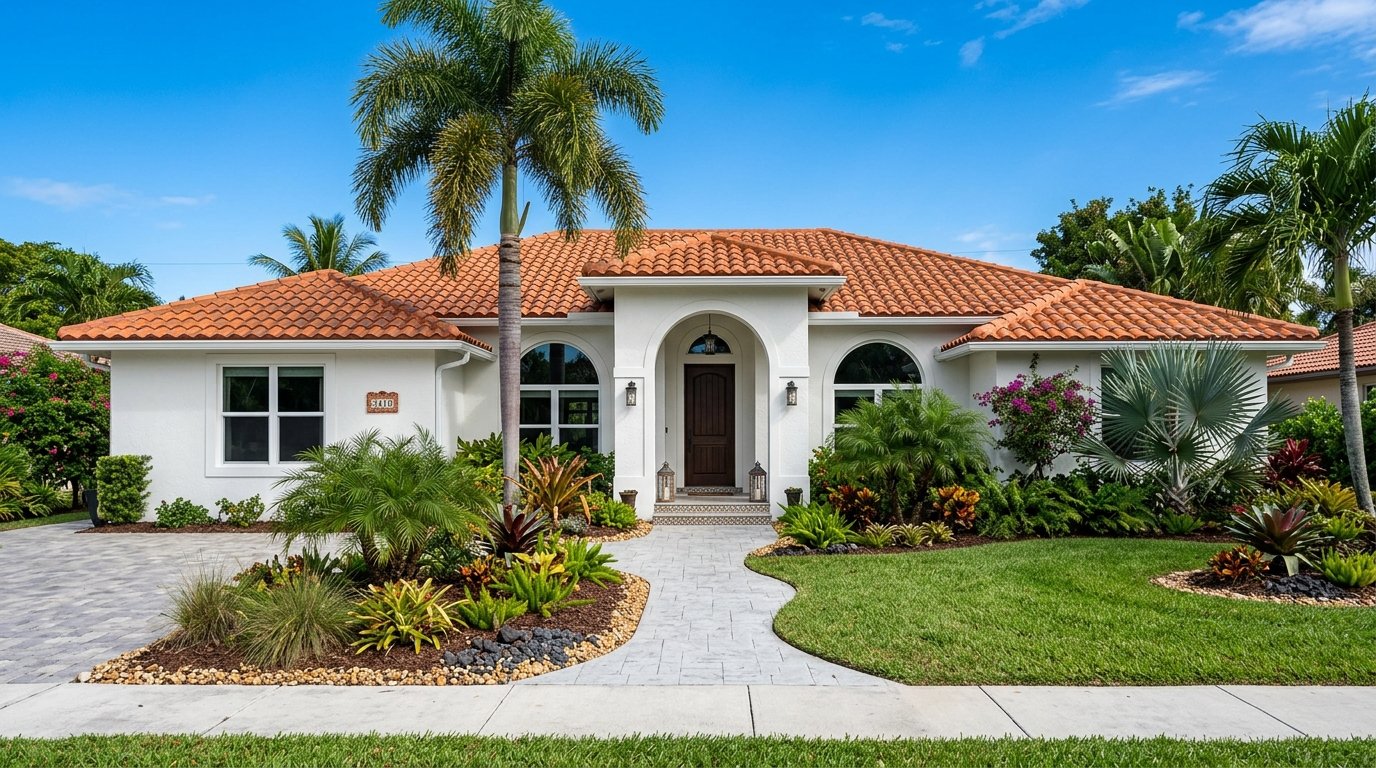
- Clay tile: $25,000–$50,000+. Lighter than concrete but more expensive per square. Historic districts and luxury properties favor clay.
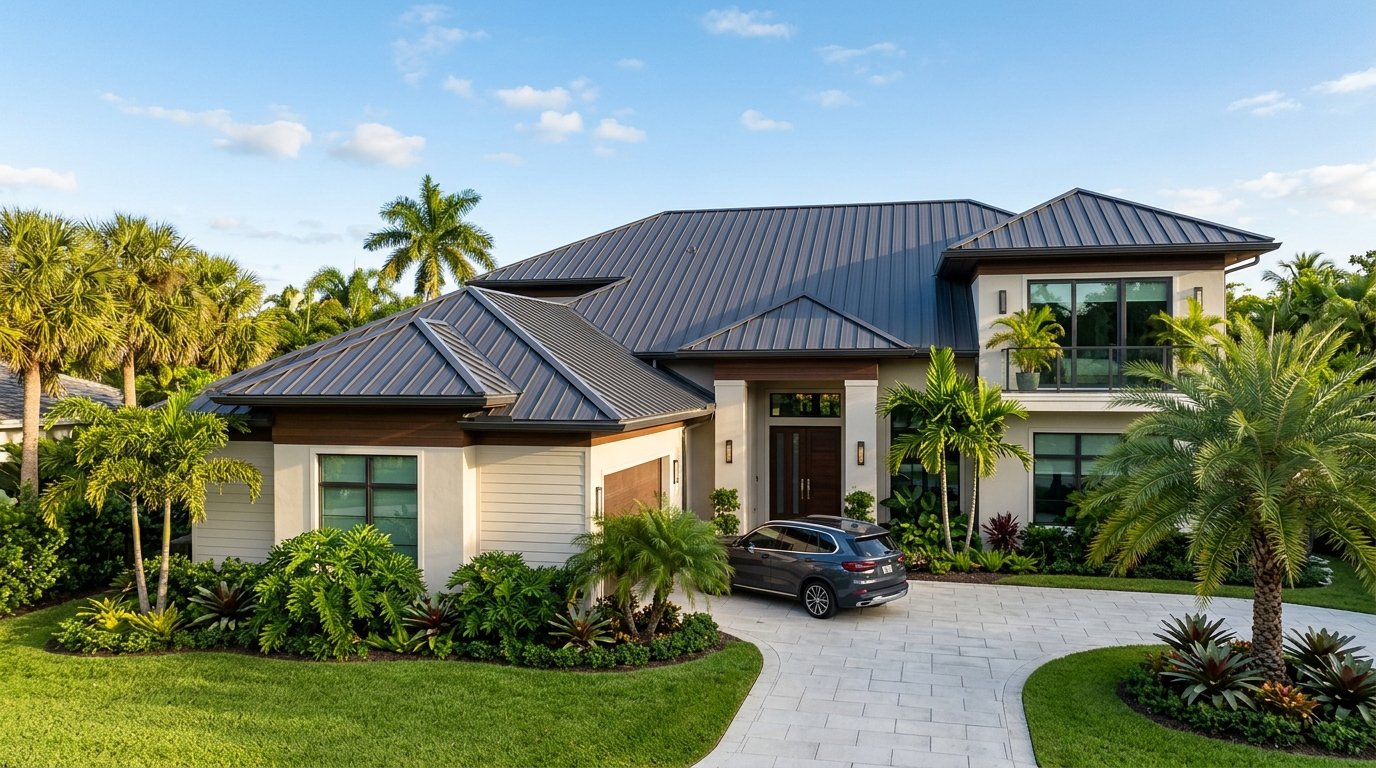
- Metal (standing seam or exposed-fastener panel): $20,000–$40,000 installed for residential. Standing seam systems at the high end; concealed-fastener systems are more economical.
Upfront cost tells only part of the story. Concrete tile has a documented lifespan of 40–50 years in South Florida with proper maintenance; clay tile can exceed that. Metal roofing, properly installed with HVHZ-rated fasteners and sealants, is routinely warranted for 50+ years and can outperform tile in certain coastal environments where salt spray accelerates tile surface erosion.
Insurance premium differences are real but not universal. Florida insurers have become increasingly granular in their pricing. Metal roofing may qualify for a wind-mitigation credit that reduces your annual premium, but the credit depends on the specific product, the attachment method, and how the wind-mitigation inspector classifies it. Tile installed to HVHZ code with a secondary water barrier also typically qualifies for credits. Get the wind-mitigation form (OIR-B1-1802) completed after installation regardless of material. It is the document that unlocks premium reductions.
Cost Per Year of Service Life, Not Just Installed Price
The number that actually determines value is cost per year of service life, not the installed price on its own. Run the math: a $30,000 standing seam metal roof with a 50-year service life costs roughly $600 per year before maintenance. A $28,000 concrete tile roof with a 35-year service life costs roughly $800 per year. Nearly a third more per year of coverage, even though the upfront price is lower. Clay tile narrows that gap because its 50+ year lifespan can match or beat metal, but only at a materially higher installed cost. This is the calculation homeowners comparing the best roof material in Miami should run before deciding on price alone. Ask any contractor quoting you a number to also state the expected service life behind that price.
Weight: A Real Structural Consideration
This is the section most contractors skip, and it is the one that can make a real difference for older South Florida homes.
Concrete tile weighs approximately 9–10 lbs per square foot. Clay tile can reach 12 lbs per square foot depending on profile. Metal roofing (whether aluminum, Galvalume steel, or copper) typically weighs 1–3 lbs per square foot. That difference is not cosmetic. On a 2,500 sq ft roof, the delta between concrete tile and metal can exceed 17,000 pounds of dead load on your roof structure.
Miami-Dade's housing stock includes a significant number of CBS (concrete block structure) homes built in the 1950s through the 1970s under structural codes that assumed a lighter roofing material, often original wood or early tile, was in place. Converting one of these homes to a heavier tile profile requires a structural engineer to assess rafter and wall-plate capacity before a permit can be pulled. In some cases reinforcement is required, adding cost.
Metal is almost always feasible from a structural standpoint on any existing home that held a prior roof. The lightweight nature of metal also makes it the standard recommendation for low-slope and flat roof sections that are common in mid-century South Florida construction. Areas where tile installation is often not an option at all.
Before committing to tile on a pre-1980 home, ask your contractor whether a structural assessment is part of the scope. If they say "it's fine, we've done it before" without pulling engineering, that is a red flag.
Maintenance: What Metal Roofing and Tile Roofs Actually Need
Installed cost and lifespan only tell half the story. What a roof requires between installation and replacement affects both your annual budget and whether it actually reaches its rated lifespan.
Metal roofing needs the least ongoing attention of any HVHZ-approved system. An annual visual inspection, periodic gutter and valley debris clearing, and a check of sealant at penetrations (plumbing stacks, HVAC curbs, chimneys) covers most of what a metal roof needs. There's no surface coating to fail and no porous material to absorb moisture.
Concrete tile requires more regular attention. The concrete substrate is porous, so it absorbs moisture and supports mold, algae, and lichen growth, especially in shaded or low-airflow areas: a cosmetic and maintenance issue in most cases, but one homeowners often mistake for damage when it's really biological staining. Concrete tile roofs in South Florida typically need a soft wash every 2–4 years to control growth, plus occasional replacement of cracked or slipped individual tiles, which happens more often than most homeowners expect from foot traffic: satellite installers, HVAC techs, and solar crews walking the field incorrectly.
Clay tile carries similar cleaning needs to concrete but is more fragile underfoot: a cracked clay tile from an improperly weighted step is one of the most common tile-roof service calls we run. Any inspection or repair work on a clay tile roof should be handled only by a crew experienced with that specific material.
Across all three materials, the deck and underlayment beneath the visible surface age independently of what you can see: a 15-year-old tile field can sit on an underlayment that needs attention well before the tile itself does. Ask for underlayment condition as part of any inspection, regardless of which material is on top.
Coastal Salt-Air Durability: Does Proximity to the Water Change the Answer?
Within roughly a mile of the coastline (Miami Beach, Key Biscayne, and much of coastal Broward) airborne salt particles accelerate corrosion on unprotected or under-specified metal. This doesn't eliminate metal roofing as an option, but it does change which metal product belongs on your home. Generic, minimally coated panels can show visible corrosion in a fraction of their rated lifespan in a high-salt environment. Marine-grade coated aluminum or Galvalume steel with a premium fluoropolymer finish (commonly branded Kynar 500 or equivalent) is engineered specifically for this exposure and is what Robson specifies on coastal jobs: the product spec should match your exact distance from the water, not a generic panel choice.
Tile doesn't carry the same corrosion risk because it's a mineral product, not metal, but it isn't maintenance-free near the coast either. Salt-laden humidity accelerates the same algae and efflorescence growth that affects tile inland, just faster, which means coastal tile roofs typically need that soft-wash cycle on the shorter end of the 2–4 year range rather than the longer end.
The practical takeaway: coastal proximity is a product-specification issue for metal and a maintenance-frequency issue for tile. Neither disqualifies a material outright, but both deserve to be part of the conversation with your contractor before you sign a contract: not discovered after installation when corrosion or staining shows up early. For homeowners also weighing asphalt shingles as a third option, Robson's GAF Certified™ Residential Roofing Contractor status (GAF ID 1164276) governs the enhanced System Plus warranty available on shingle systems, though shingles see limited use in HVHZ coastal applications compared to metal and tile because of lower baseline wind ratings.
Not sure which material fits your home, your HOA, and your budget?
Robson will inspect your structure, check your HOA docs, and hand you two honest written quotes, metal and tile, with real 2026 pricing. No pressure toward whichever option is easier for us to install.
HOA Rules: Who Actually Decides
In many South Florida communities, the HOA governing documents, not the homeowner, determine what roofing material is permitted. This is not a technicality. An HOA that was established when the community was built with tile roofs typically mandates tile in its CC&Rs, and that mandate survives individual ownership changes.
The practical reality: the majority of planned residential communities in Miami-Dade, Broward, and West Palm Beach that were built between 1980 and 2005 were built with flat or S-profile concrete tile. Their HOA documents frequently specify "tile roofing only" or restrict colors and profiles to a specific manufacturer's palette. Installing metal in those communities without HOA approval is a violation that can force a tear-off and reinstallation at the homeowner's expense. Even if the building department issued a permit, because the permit does not override HOA deed restrictions.
Historic districts add another layer. Miami Beach, Coral Gables, and parts of Little Havana have design review boards that control exterior changes including roofing material and color. Approval from the design review board is required before the building department will issue a permit.
Robson can help you review your HOA documents and identify what approvals are needed before we quote a material. Knowing whether you're HOA-restricted before you fall in love with a metal standing-seam system saves everyone time.
Insurance and Wind-Mitigation Credit Implications
Florida's wind-mitigation credit system rewards roofs that resist wind uplift and impact, and the credit amount depends on documentation, not just the material you chose. After any roof replacement, a licensed inspector completes the Uniform Mitigation Verification Inspection Form (OIR-B1-1802), which your insurer uses to recalculate your premium. Skipping this step is the single most common way Florida homeowners leave money on the table after a legitimate roof upgrade.
Metal roofing generally qualifies for the strongest wind-mitigation credits of the materials discussed here, driven by its higher uplift rating and, on many products, a certified impact rating against wind-borne debris. The exact discount varies by carrier: insurers weight the OIR-B1-1802 categories (roof covering, roof deck attachment, roof-to-wall connection, secondary water resistance, opening protection) differently, and your credit depends on how the full system, not just the panel, scores across those categories.
Concrete and clay tile also qualify for meaningful wind-mitigation credits when installed to current HVHZ code with a secondary water barrier, though the credit is typically lower than a comparably specified metal system, reflecting tile's individual-unit failure mode discussed above. The gap isn't universal: a well-documented, foam-adhesive tile system with a compliant secondary water barrier can outperform a poorly documented metal job on the same form.
The practical lesson: the material matters less to your premium than the paperwork behind it. Robson provides the full NOA package, permit closeout, and inspection documentation your insurance agent needs to process the wind-mitigation credit correctly for whichever material you choose: many homeowners never receive the discount they've earned simply because a previous contractor never handed over that paperwork.
Which to Choose: A Decision Framework
Here is a practical framework based on common South Florida scenarios:
Choose tile if:
- Your HOA governing documents require tile or restrict material type to profiles your community was built with
- You are in a historic district with design review requirements that favor tile
- You want the classic Mediterranean or Spanish Colonial aesthetic that dominates South Florida architecture and maximizes resale comparability
- Your home's structural system has been assessed and can support the weight without reinforcement
- Your budget includes the higher upfront cost of clay tile for a premium finish
Choose metal if:
- Your home is a pre-1980 CBS build and a structural assessment raises concerns about adding tile weight
- You have flat or low-slope roof sections where tile is not an appropriate solution
- You want a 50+ year lifespan with lower ongoing maintenance requirements
- Energy efficiency is a priority: metal with a light reflective finish can reduce cooling loads meaningfully in Miami's climate
- Your HOA permits metal or you are not in a regulated community
- You are in a coastal zone where salt spray and humidity accelerate tile surface degradation and you prefer a material less susceptible to efflorescence
Side-by-Side Comparison
| Factor | Concrete Tile | Clay Tile | Metal |
|---|---|---|---|
| Installed Cost (typical) | $18k–$35k | $25k–$50k+ | $20k–$40k |
| Expected Lifespan | 40–50 yrs | 50+ yrs | 50+ yrs |
| Weight (lbs/sq ft) | 9–10 | 10–12 | 1–3 |
| HOA Compatibility | High (standard in most communities) | High | Varies; verify HOA docs first |
| Insurance Premium Impact | Wind-mit credit possible (NOA required) | Wind-mit credit possible | Wind-mit credit possible (product-dependent) |
| Installation Time | 5–10 days typical | 5–10 days typical | 3–7 days typical |
| Wind Uplift Rating | Good (whole-field rated) | Good (whole-field rated) | 150–180+ mph equivalent |
| Maintenance Level | Moderate (wash every 2–4 yrs) | Moderate; fragile underfoot | Minimal (annual visual check) |
| Coastal / Salt-Air Durability | No corrosion risk; faster algae growth near coast | No corrosion risk; faster algae growth near coast | Requires marine-grade coating within ~1 mile of coast |
Robson Industrial Group LLC · CGC1541144 · CCC1337790 · GAF Certified™ Residential Roofing Contractor ID 1164276 · Miami-Dade, Broward, & West Palm Beach, FL · (954) 546-4161
Metal Roof vs. Tile: Frequently Asked Questions
Is a metal roof or a tile roof better for hurricane wind resistance in Miami-Dade?+
Both can meet HVHZ wind-design requirements when installed under a valid Notice of Acceptance, but they fail differently in extreme wind. Metal panels form a continuous fastened surface with uplift ratings commonly tested to 150–180+ mph equivalent, so the whole system tends to hold or fail together. Tile is fastened piece by piece, and individual tiles at ridges, hips, and rake edges are the most likely to dislodge first in a major storm, even on a code-compliant roof.
Does a metal roof actually lower my homeowners insurance premium in Florida?+
In most cases, yes, but the savings depend on your carrier and the completed Uniform Mitigation Verification Inspection Form (OIR-B1-1802). Metal roofing typically qualifies for stronger wind-mitigation credits than tile because of its higher uplift rating, but both materials can earn meaningful discounts when installed to current HVHZ code and properly documented.
Can I install a metal roof over my existing tile roof?+
Sometimes, but it requires evaluating the existing deck condition, ventilation, and structural capacity before it's approved. Miami-Dade will not permit it automatically. This assessment is part of Robson's quoting process for any tile-to-metal conversion.
How much more maintenance does a tile roof need compared to metal?+
Concrete and clay tile typically need a soft wash every 2–4 years to control algae, mold, and lichen growth, plus occasional replacement of cracked or slipped tiles from foot traffic. Metal roofing needs only an annual visual inspection, gutter clearing, and a check of sealant at penetrations: it is, by a wide margin, the lower-maintenance option of the two.
What happens if my HOA requires tile but I want a metal roof?+
Your HOA's governing documents control what's installed, and that restriction survives a building permit: the city issuing a permit does not override an HOA deed restriction. Installing metal without approval can force a costly tear-off. Robson reviews your HOA's CC&Rs before quoting so you don't waste time pricing a material your community won't approve.
How long does installation take for each roof type in Miami-Dade?+
For a typical single-family home: metal roofing runs 3–7 days, concrete tile runs 5–10 days, and clay tile runs 5–10 days as well, though complex clay profiles can run longer. Permit review can add 1–2 weeks to the total project timeline regardless of material.
Which roof lasts longer in a coastal, salt-air environment?+
With the correct product specification, both can perform well. Metal needs a marine-grade coating (such as a Kynar 500-class fluoropolymer finish) within roughly a mile of the coast to resist accelerated corrosion; without it, corrosion can appear well before the rated lifespan. Tile carries no corrosion risk since it's a mineral product, but salt-laden humidity accelerates algae and efflorescence growth, shortening the interval between cleanings.
Do I need a structural engineer before switching from metal or shingles to tile?+
Often, yes: especially on homes built before 1980. Concrete tile weighs roughly 9–10 lbs per square foot versus 1–3 lbs for metal, and older CBS homes were frequently built to structural assumptions that didn't anticipate that added weight. A structural assessment before permitting protects both your roof and your investment.
Related Resources
Roof Replacement Cost in Miami — 2026
Material-by-material cost breakdown for Miami-Dade and Broward: tile, metal, flat roofing. Permit fees, deck repair ranges, and financing options.
Read the Cost Guide →HVHZ Compliance for Miami Homeowners
What the High-Velocity Hurricane Zone actually requires, how NOA and Florida Product Approval work, and why it matters for your insurance claim.
Read the Guide →Is a Metal Roof a Good Idea in Florida?
Noise in the rain, hail dents, upfront cost: the honest, objection-by-objection answer before you commit to metal.
Read the Honest Answer →Metal or Tile — Get an Honest Quote from a Licensed South Florida Roofer
Your roof has to survive the next Category 4 and pencil out over 30 years: not just look good on installation day. Robson Industrial Group is a Florida-licensed roofing contractor (CGC1541144 / CCC1337790) and GAF Certified™ Residential Roofing Contractor (ID 1164276) serving Miami-Dade and Broward. We install metal and tile under documented Florida Product Approvals, pull all permits, and help you navigate HOA requirements before you commit, and we'll hand you two honest written quotes, not one steered toward whichever material is easier for us to install.
Get Your Free Two-Material Quote →Call: (954) 546-4161 · CGC1541144 · CCC1337790 · GAF Certified™ · Miami-Dade, Broward, & West Palm Beach