Impact Windows & Doors · South Florida
Impact Windows vs Storm Shutters: Which Protects Your South Florida Home Better?
Every South Florida homeowner has to make this decision at some point: impact windows or storm shutters? Both protect against hurricane-force winds and the wind-borne debris that causes most structural damage during a storm. But they work differently, cost differently, qualify for different insurance benefits, and have very different day-to-day implications for how you live in your home.
This guide compares them honestly, including the cases where shutters are the right answer and the cases where they are not. Lic. CGC1541144.
The Core Difference: Passive vs Active Protection
The most important distinction between impact windows and storm shutters is operational: impact windows provide protection all the time, without any action required. Storm shutters provide protection only after someone deploys them, and that deployment has to happen before the storm, not during it.
This difference has real consequences beyond convenience. During hurricane season, you may have 24–48 hours of warning before a storm makes landfall. If you are traveling, if you or a family member cannot physically deploy shutters, or if a storm track shifts faster than expected, passive protection matters. Impact windows eliminate the deployment problem entirely.
Storm shutters, on the other hand, can be removed or left open when not in use, which matters in certain situations, particularly for properties where aesthetics, historic preservation rules, or HOA regulations make permanently visible exterior protection difficult.
HVHZ Product Approval: What Both Options Must Have
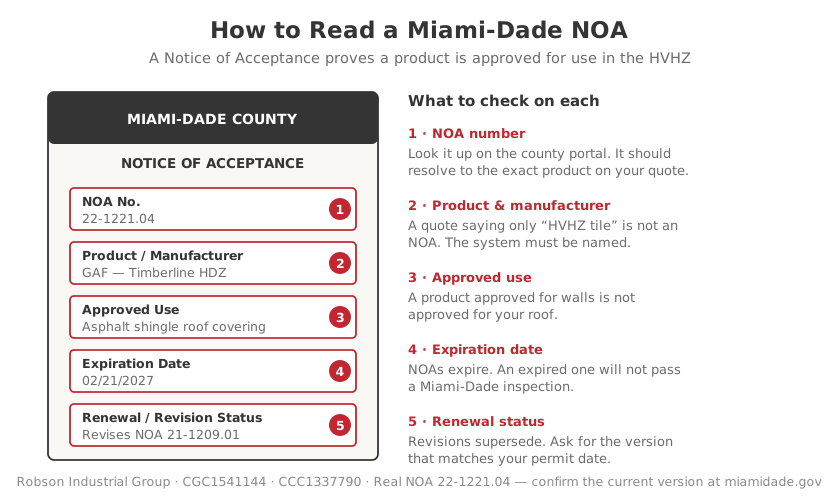
In Miami-Dade and Broward, both designated High-Velocity Hurricane Zones, any window, door, or shutter system installed as hurricane protection must carry valid HVHZ product approval. For Miami-Dade, this means a Notice of Acceptance (NOA) number from the Miami-Dade Product Control Division. For Broward, it means a Florida Product Approval (FPA) with the HVHZ flag.
This applies equally to impact windows and storm shutters. A shutter system that is not NOA-approved is not legal protection in Miami-Dade; it will not satisfy your insurer, and it will not pass a permit inspection. Verify the product approval before you purchase anything.
What to ask: “What is the NOA or FPA approval number for this product, and can I look it up?” Any legitimate contractor or supplier will be able to answer immediately.
Insurance Discounts: Where Impact Windows Win
Florida homeowner insurance premiums in South Florida are among the highest in the United States. Wind mitigation credits, discounts earned by demonstrating that your home is better protected against hurricane damage, can reduce those premiums significantly. This is where impact windows consistently outperform shutters.
The Florida wind mitigation inspection form (OIR-B1-1802) awards credits for openings protection. The credit tiers, from lowest to highest discount, are:
- No protection (standard single-pane windows) — baseline, no credit
- Shutters rated to the applicable building code — a partial credit
- Impact-resistant glazing meeting the HVHZ standard — the maximum credit available for openings protection
The exact discount depends on your insurer’s filed rate tables, but the directional difference is consistent: impact windows earn more than shutters. Some insurers in South Florida have applied discounts of 20–45% to the wind portion of the premium for fully impact-protected homes. Over 10 years, those savings can offset a significant portion of the installation cost.
Important nuance: to earn the maximum credit, every opening must be protected, not just most windows. A home with impact windows but non-impact exterior doors or skylights without HVHZ-rated protection will not qualify for the full credit. The inspection covers all openings.
Permits: Both Require Them
A common misconception: shutters don’t need a permit. In Miami-Dade and Broward, this is wrong. Permanent shutter systems (accordion shutters, roll-down shutters) require a building permit and inspection. Temporary panels (plywood, fabric) do not require a permit, but they also do not qualify for the insurance credits described above and are not considered HVHZ-compliant protection.
Impact window replacement always requires a permit. The permit process for windows in South Florida typically includes:
- Application with product approval documentation (NOA or FPA number)
- Structural calculation for wind load on the specific opening
- Installation inspection to verify anchoring, flashing, and sealant
- Final inspection and certificate of completion
Both the permit and the certificate of completion matter for insurance purposes. Your insurer may request the permit documentation when you apply for a wind mitigation discount.
Cost Comparison: Upfront vs Lifetime
Impact windows cost more upfront than most shutter systems. The exact numbers depend on window size, quantity, the specific product line, and whether structural modifications are required during installation. A general range for South Florida:
- Accordion shutters (permanent, per opening): $400–$1,000 per opening depending on size, hardware grade, and motor for large panels
- Roll-down shutters (motorized): $800–$2,000+ per opening
- Impact windows: $800–$2,500+ per opening depending on size, product series (single-hung vs casement vs sliding), and frame material
The lifetime cost calculation is different. Impact windows require no annual maintenance beyond normal cleaning, no deployment before each storm, and no storage of seasonal panels. Accordion and roll-down shutters require lubrication, track cleaning, and eventual motor or hardware replacement. Panel shutters require annual setup and takedown, storage space, and physical labor.
For homeowners who intend to stay in the home for 10+ years, the insurance discount often makes impact windows cost-competitive with or superior to shutters on a lifetime basis, even with the higher upfront cost.
When Shutters Are the Right Answer
Impact windows are not always the right choice. There are situations where shutters make more sense:
- Historic districts and HOA restrictions: Some historic districts in Coral Gables and Miami Beach restrict the exterior appearance of windows in ways that make impact window replacement difficult or subject to review board approval. Accordion shutters that close only before storms may be the compliant option.
- Rental or investment properties: If you are managing a property where tenants are responsible for storm prep and cost control is a priority, shutters may offer adequate protection at a lower capital cost.
- Budget constraints on a specific timeline: If the property needs protection before hurricane season and the full window replacement budget is not available, accordion shutters on the most vulnerable openings can be a legitimate interim solution while window replacement is planned for the following year.
- Large commercial or industrial openings: Roll-down shutters are often the practical option for large garage doors, loading dock openings, or sliding glass doors wider than standard residential impact-rated sizes.
The Combination Approach
Some homeowners use both: impact windows throughout the home and shutters on specific openings like large sliding glass doors or garage doors where the impact product options are more limited or the cost differential is significant. This approach can still qualify for meaningful insurance discounts if the inspector confirms all openings are protected to code.
If you go this route, get the wind mitigation inspection done after everything is installed. The inspector will assess every opening individually, and you need to know which openings, if any, are not meeting the threshold for the maximum credit.
What Robson Installs
Robson Industrial Group installs impact windows and impact doors throughout Miami-Dade and Broward under CGC1541144. We work with PGT Innovations and Eco Windows products, both carrying valid HVHZ product approval, across a range of price points from entry-level to premium performance. Every installation includes permit pulling, structural compliance, and a final inspection.
We do not install shutters. If shutters are the right answer for your property, we can refer you to a licensed shutter contractor. Our goal is to help you make the right decision, not to sell you one product when another serves you better.
Get a Free Impact Window Estimate →
Frequently Asked Questions
Do storm shutters qualify for the same insurance discount as impact windows in Florida?
No. The Florida wind mitigation inspection form (OIR-B1-1802) awards the highest credit for impact-resistant glazing meeting the HVHZ standard. Shutters rated to the applicable building code earn a partial credit, but impact windows consistently earn more. The exact dollar difference depends on your insurer's filed rate tables. Get a wind mitigation inspection done after any protection upgrade. Your insurer will apply the correct credit tier based on the inspector's findings.
Do storm shutters require a building permit in Miami-Dade and Broward?
Permanent shutter systems (accordion shutters and roll-down shutters) require a building permit and inspection in both Miami-Dade and Broward under HVHZ provisions of the Florida Building Code. Temporary fabric or plywood panels do not require a permit but also do not qualify for HVHZ product approval or insurance credits. If your shutters were installed without a permit, there may be no record of them for insurance purposes.
Can I mix impact windows and shutters to get the insurance discount?
Yes, as long as every opening in the home is protected to the applicable HVHZ standard. You can have impact windows on most openings and shutters on others (large garage doors or sliding glass doors, for example) and still qualify for credits. The wind mitigation inspector will evaluate each opening individually. If any opening is not protected, that opening will reduce or eliminate the credit for the openings category. Get the inspection done after all protection is installed.
How long does an impact window installation take?
A typical single-family home impact window replacement in South Florida takes 2–5 days of installation time after permit approval, depending on the number of openings, the window types, and whether any structural work is required around the opening. Permit turnaround in Miami-Dade and Broward varies by municipality and season; in hurricane season, allow extra time. The total timeline from contract to final inspection is typically 4–10 weeks for a full home.
What is the difference between laminated glass and tempered glass for hurricane protection?
Laminated glass has a polyvinyl butyral (PVB) or ionoplast interlayer between two glass panes. When the glass breaks under impact, the interlayer holds the fragments together, maintaining the barrier and preventing pressure equalization inside the home, the mechanism that causes structural failure during hurricanes. Tempered glass shatters into small granules when it breaks and does not provide this protection. HVHZ-rated impact windows use laminated glass. Tempered-only glass does not qualify for HVHZ product approval.