Florida Home Insurance and Roof Replacement: What Miami-Dade Homeowners Need to Know
Your insurer may not cancel your policy the moment your roof turns 15, but in South Florida, the link between roof condition, insurance eligibility, and premium is more direct than most homeowners realize. Here is what you need to understand before your insurer asks for an inspection, before you file a claim, and before you schedule a replacement.
When Florida Insurers Require a Roof Replacement
Florida homeowners insurance carriers have tightened their underwriting standards significantly since 2021. The practical result for South Florida homeowners: roofs over a certain age, typically 15 years for asphalt shingle and 20–25 years for tile, often trigger a requirement to either submit a roof condition inspection report or replace the roof as a condition of maintaining coverage. This is not a universal rule. Specific thresholds vary by carrier, and some carriers have stopped writing new policies in certain South Florida zip codes entirely.
One clarification worth making up front: roof age is not a legal replacement deadline. No Florida law requires replacing a roof at 15 years. The number comes from an insurance statute. The Florida 15-year roof rule, explained.
The trigger is not the calendar age alone. It is the age in combination with the condition documented in the insurer’s inspection. A 16-year-old barrel tile roof with intact underlayment, no missing tiles, and solid fascia and soffit may pass inspection. The same age roof with compromised underlayment, storm-lifted sections, or evidence of water intrusion at the ridge likely will not. The insurer’s inspector, not yours and not your contractor’s, makes that determination. If the inspection fails, you typically receive a notice of intent to non-renew, and you have a fixed window (often 30–60 days) to respond with either a repair certification or a replacement in progress.
The most common mistake we see homeowners make in this situation: waiting until the notice arrives to start getting quotes. A compliant roof replacement in Miami-Dade requires a permit, an inspection, and a final sign-off by the building department. The timeline from permit application to final approval is typically 4–8 weeks depending on county workload and weather. If your non-renewal window is 45 days, you are already behind before the first contractor sets foot on your roof.
How a New Roof Affects Your Insurance Premium
A roof replacement does not automatically reduce your insurance premium, but it can, under specific conditions. The reduction comes through two separate mechanisms, and most homeowners who benefit from both do not realize they are distinct.
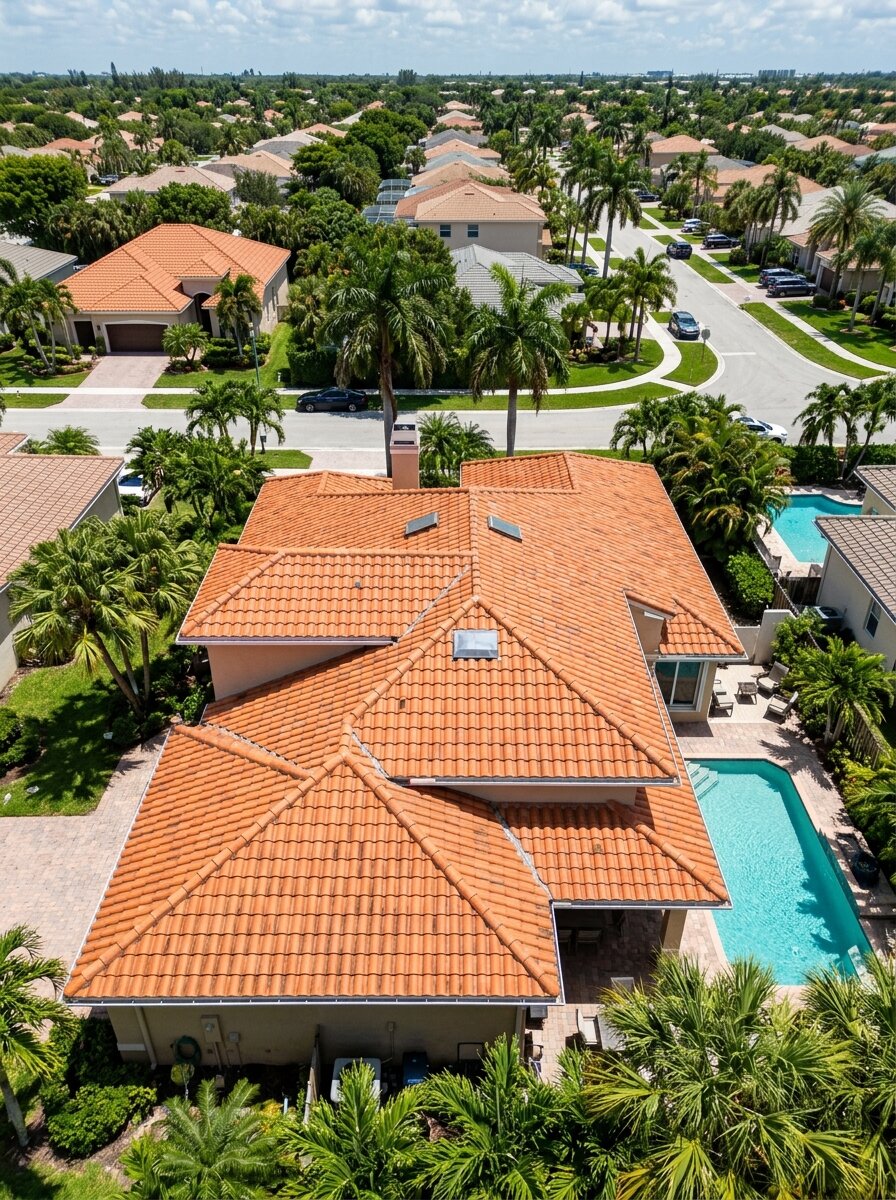
The first mechanism is underwriting eligibility. A newer roof may allow you to qualify for carriers you could not previously access, or to reinstate coverage that was being non-renewed. Carrier competition, not a specific discount, drives this premium effect.
The second mechanism is the wind mitigation inspection discount. Under Florida law, your insurer must offer a premium discount for verified wind-resistant features, and those features are documented on the OIR-B1-1802 wind mitigation inspection form. A new roof, installed to current Florida Building Code, typically qualifies for three of the major discount categories on that form: roof covering (the type of material and its approval rating), roof deck attachment (how the sheathing is nailed), and roof-to-wall connection (the type of hurricane clips or straps used at each truss). These three categories collectively represent the largest share of the available wind mitigation discount. In Miami-Dade and Broward, a qualifying new roof can reduce the wind portion of your premium by 20–45% depending on your carrier and your prior roof’s score.
The discount is not automatic. You need a licensed wind mitigation inspector to inspect the completed installation, after the final county inspection approval and not before, and submit the OIR-B1-1802 report to your insurer. Budget $100–$175 for the inspection. The premium savings on the first renewal typically pay for the inspection many times over.
What the Wind Mitigation Inspection Actually Checks
Understanding what the inspector is documenting helps you make better decisions during the replacement, before the work is done, when you can still influence the outcome.
The inspector will document the roof covering (material type and Miami-Dade or Florida Product Approval number), the roof deck attachment pattern (nail size and spacing: typically 8d ring-shank nails at 6” field and 6” edge spacing for the highest credit), the roof-to-wall connection type (single wraps, double wraps, or clips), and the roof shape (hip roofs score better than gable roofs because they shed wind load more evenly). They will also check whether the roof has a secondary water resistance (SWR) layer, a self-adhering underlayment or equivalent product applied to the deck before shingle or tile installation.
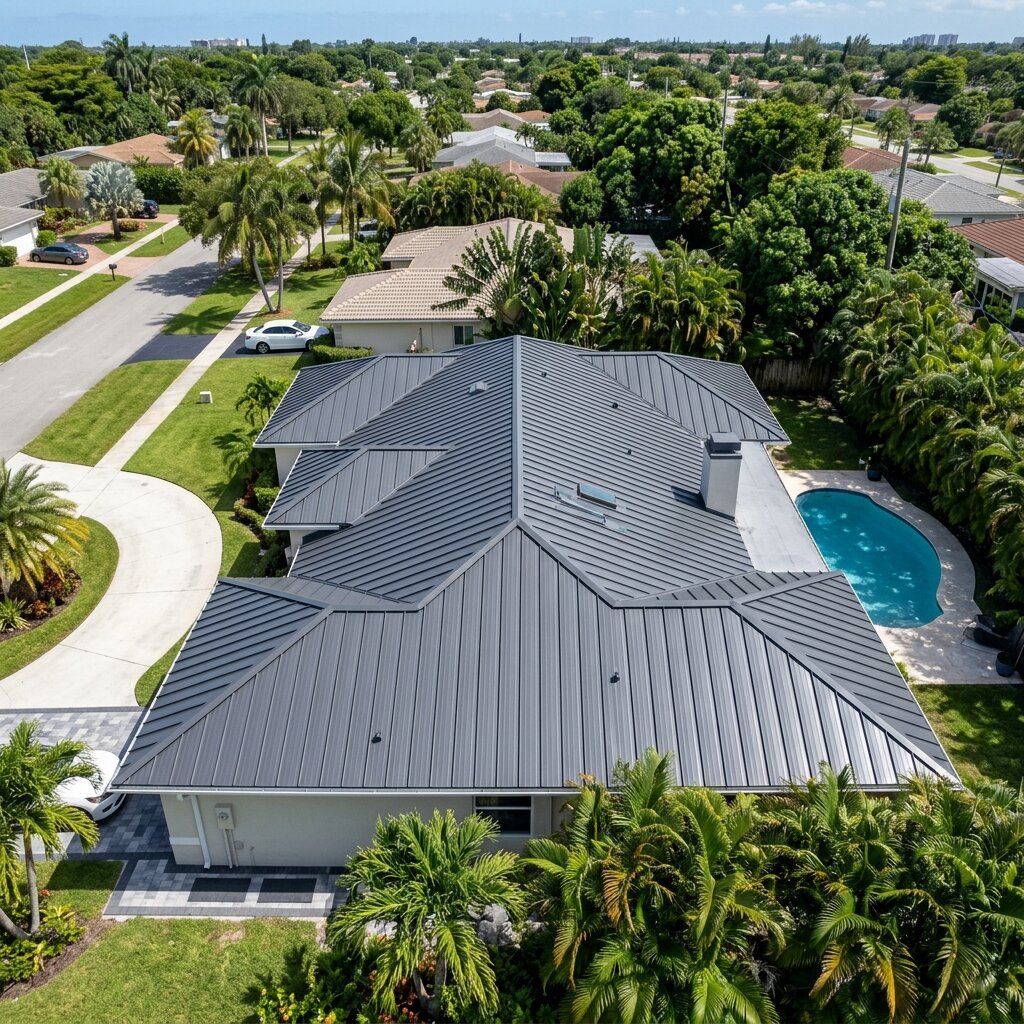
The SWR layer is the single most controllable factor during a replacement. Florida Building Code requires it in the HVHZ (Miami-Dade and Broward), which means it should be standard. But confirm with your contractor before work begins that the underlayment product they are specifying qualifies as SWR and carries the required Florida Product Approval. A contractor who substitutes a non-qualifying felt paper for cost savings may create a situation where your wind mitigation inspector cannot certify the SWR category, and you lose that discount permanently until the next replacement.
Nail size and spacing are similarly controllable. The current Florida Building Code minimum in the HVHZ requires 8d ring-shank nails. Specifying this during contract negotiations and confirming it in the permit documents protects your wind mitigation score. An inspector who finds 6d smooth-shank nails, which were the prior code standard, will check the “minimum” category, not the “enhanced” category, and your premium reduction will be lower as a result.
Coverage Gaps That Catch Homeowners Off Guard
Three coverage situations arise consistently when homeowners go through a roof replacement in South Florida.
The first is the gap between contract signing and policy renewal. If your insurer has flagged your roof and you are replacing it, confirm with your agent exactly what documentation they need and what timeline they will accept. A contractor’s signed contract is not the same as a completed replacement. Some insurers will accept a signed contract with a start date as evidence of compliance. Others require the permit to be issued, or the final inspection to be passed. Know which standard your insurer requires before you assume a signed contract solves the problem.
The second is the open-permit situation. A roof replacement that has a permit but no final inspection sign-off is an open permit on your property record. Open permits do not prevent you from living in the home or selling it outright, but they can complicate refinancing, create issues in buyer due diligence during a sale, and in some cases affect insurance underwriting. A reputable contractor closes permits as a standard part of the job, not as an add-on service. If a contractor proposes to handle the permit themselves and the timeline for the final inspection is vague, that is a flag worth pressing on before you sign.
The third is the overlap between roof damage and insurance filing. If your roof has storm damage and you are considering a replacement, the timing and sequencing of the insurance claim matters. Filing a claim before getting a licensed contractor’s assessment means the insurer’s adjuster sets the scope and cost, often conservatively. Getting a contractor’s assessment first, documented in writing with photographs, gives you a baseline for the adjuster conversation. This is not about inflating a claim; it is about having an accurate starting point. A contractor who has experience with insurance-related roof replacements in Miami-Dade understands this process and can help you document the pre-replacement condition accurately.
Choosing a Contractor for an Insurance-Required Replacement
Several contractor practices that are legal in other states create problems specifically in the context of an insurance-driven roof replacement in Florida.
Assignment of benefits (AOB) arrangements, in which a contractor takes assignment of your insurance claim in exchange for handling the process, were significantly restricted by Florida legislation in 2023. If a contractor proposes an AOB arrangement, understand exactly what you are signing before executing it.
Similarly, contractors who offer to “waive your deductible” are engaging in a practice that is explicitly prohibited under Florida law (Section 817.234, F.S.). The deductible is a defined obligation under your policy, and a contractor who absorbs it is inflating the claim to cover the cost. This exposes the homeowner to potential insurance fraud liability, regardless of whether the homeowner understood the arrangement.
What you should look for: a Florida Certified Roofing Contractor license (CCC prefix), active workers’ compensation and liability insurance, a clear permit-and-inspection process included in the contract price, and a written warranty on both materials and workmanship. Robson Industrial Group holds CGC1541144 (Certified General Contractor) and CCC1337790 (Certified Roofing Contractor), both verifiable at myfloridalicense.com. We pull all permits, manage the final inspection, and provide the permit and NOA product-approval documentation your independent wind mitigation inspector will need.
Robson Industrial Group · CGC1541144 · CCC1337790 · Florida Certified General Contractor & Roofing Contractor · Licensed and Insured · Miami-Dade, Broward, and West Palm Beach, FL · (954) 546-4161
Frequently Asked Questions
Will a new roof lower my homeowners insurance in Florida?
It can, through two mechanisms. A newer roof may restore your eligibility for more competitive carriers, reducing your premium through market access. A wind mitigation inspection after the replacement can document qualifying features (roof covering, deck attachment, roof-to-wall connection) that generate a direct premium discount. In Miami-Dade and Broward, the wind mitigation discount on a qualifying new roof often ranges from 20–45% of the wind portion of the premium, depending on your carrier and your specific installation features.
My insurer sent a notice of non-renewal because of my roof. How long do I have?
Non-renewal notices in Florida typically give 30–90 days, depending on the carrier and the type of notice. The critical issue is timeline: a permit-pulled, inspection-passed roof replacement in Miami-Dade typically takes 4–8 weeks from permit application to final sign-off. If your window is 45 days, you need to have a contractor under contract and the permit applied for within the first week. Contact Robson at (954) 546-4161 to get an assessment and permit timeline as quickly as possible.
What is a wind mitigation inspection and do I need one after a new roof?
A wind mitigation inspection is a licensed inspector’s assessment of your home’s wind-resistant features, documented on the OIR-B1-1802 form. Your insurer uses this form to calculate your wind premium discount. After a new roof installation, you should schedule a wind mitigation inspection to capture the credits from your new roof covering, deck attachment method, and roof-to-wall connections. The inspection costs $100–$175 and typically pays for itself many times over in the first renewal cycle.
Can a contractor waive my insurance deductible in Florida?
No, this is explicitly prohibited under Florida law (Section 817.234, F.S.) and constitutes insurance fraud. A contractor who offers to absorb your deductible is either inflating the claim or misrepresenting the scope of work to offset the cost. Both expose you to liability. Do not sign any contractor agreement that includes deductible waiver or an assignment of benefits arrangement without consulting your attorney or insurance agent first.
Does a roof replacement require a permit in Miami-Dade?
Yes. Every roof replacement in Miami-Dade and Broward requires a permit. The permit triggers a county inspection that verifies the installation complies with the Florida Building Code and the HVHZ requirements that apply to South Florida. An unpermitted replacement has no final inspection on record, cannot be documented on a wind mitigation inspection report, and will not generate the insurance discount you are expecting. It also creates complications at resale. Robson Industrial Group pulls all permits and manages the full inspection process as part of every project.
Related Resources
What to Expect When Filing a Florida Roof Insurance Claim
A step-by-step walkthrough of the insurance claim process, from first call to adjuster inspection to contractor scope to settlement. What you should document, and when to push back.
Read the Claims Guide →5 Things Miami Homeowners Must Know Before Replacing Their Roof
Permit requirements, contractor licensing, HOA approval, Florida product approval, and what questions to ask before signing a roofing contract in South Florida.
Read the Guide →Licensed Roofing Contractor · CGC1541144 · CCC1337790
Serving Miami-Dade and Broward. Permit-pulled, inspection-passed roof replacements with complete permit and product-approval documentation for your insurer.
Get a Free Estimate →Get a Free Roof Inspection and Estimate
Robson Industrial Group is a Florida Certified Roofing Contractor (CCC1337790) and General Contractor (CGC1541144) serving Miami-Dade and Broward. We manage the permit, install to HVHZ code, coordinate the final county inspection, and provide the complete permit and NOA product-approval documentation your independent wind mitigation inspector will need to maximize your insurance discount.
Get a Free Estimate →Call: (954) 546-4161 · CGC1541144 · CCC1337790 · Miami-Dade, Broward, and West Palm Beach